

Performance Prep for Musicians: 5 Keys to Confidence and Clarity on Stage
A “How To” for Musicians Who Want to Feel Ready and Expressive On Stage Great performances begin long before you


Why It’s Hard to Stay Consistent with Music Practice (and How to Fix It)
If you’re like most string players, you’ve felt the familiar tug-of-war between motivation and reluctance.
You get inspired…
You practice hard for a few days…
Then life happens.
Suddenly your case stays closed longer than planned, and you wonder how to start again.
But here’s the truth:
A consistent practice routine doesn’t require superhuman discipline – You just need enough discipline to stick with a few smart choices until routine kicks in.
Whether you play the violin, cello, or any other musical instrument, your practice defines everything about your playing. This topic is one of the most important for you, so let’s address it head on.
As we like to remind our violin, viola, and cello students – great lessons and great performances all start with one thing: great practice.
So, You’re Ready to Build Your Best Music Practice Routine?
First, you want to begin by removing many of the obstacles between you and a consistent practice schedule. This will minimize the effort you need to put in and will allow habit to take over sooner.
This is key.
Soon you won’t need to rely on the ebb and flow of varying levels of inspiration or motivation, and that’s why we created this guide.
Below, you’ll find five musician-approved practice strategies to help you build a reliable routine that ensures consistency and ease.
If you’re a student, teacher, or professional, these tips will help you return to your practice space with more clarity, confidence, and care.
Plan Your Weekly Practice Routine (Violin, Viola, and Cello focus)
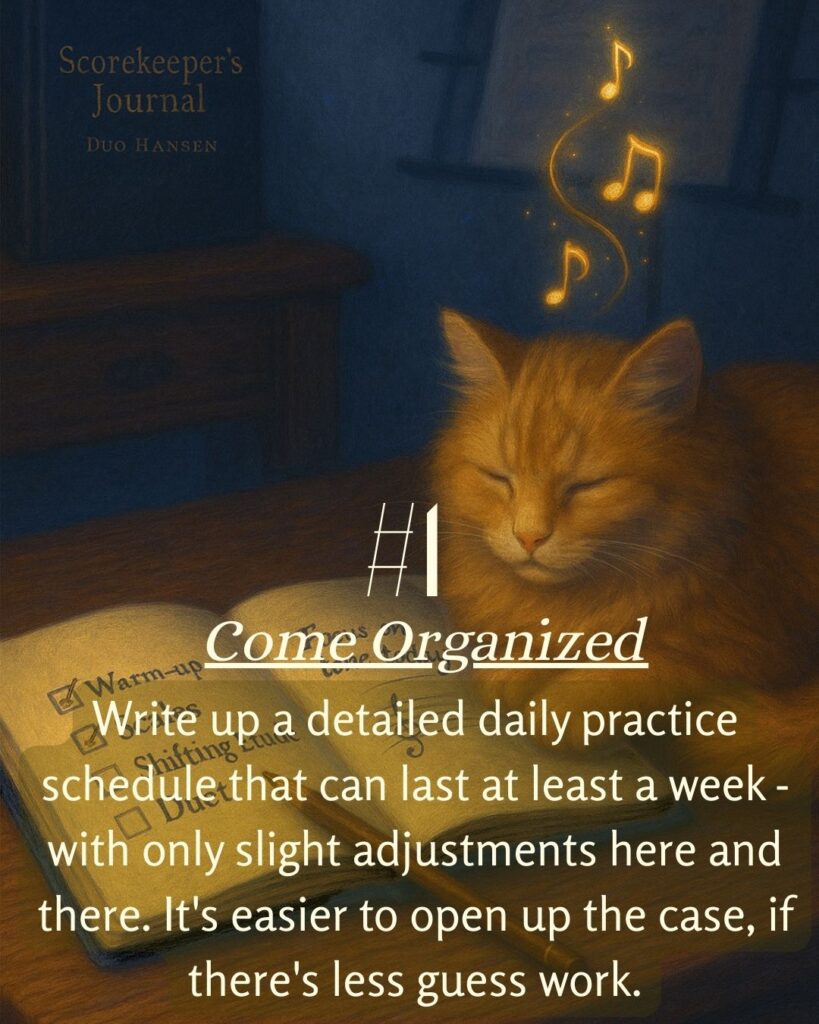
Before the week begins, map out your goals and materials.
Writing a simple practice plan in advance reduces decision fatigue and helps you open the case more quickly.
If you need a little guidance, our printable Scorekeeper’s Sheets were designed to help string players with that in mind — beginner/intermediate and upper intermediate/advanced versions are available so you can structure your sessions with confidence.
🔥Pro Tip: for the sake of consistency, Sit down and plan out a schedule that can be used for the whole week. A few minutes of clarity now saves hours of wasted energy later.
It’s so much easier to get the instrument out if you already have a plan you can put in action.
Prioritize what your teacher pointed out to you in your lesson that week, as well as working on the problems that you notice on your own.

This might be the single most powerful shift you can make. 💪
Practicing at the same time every day – or at least having a predictable schedule – turns effort into habit. That consistency reduces emotional resistance and makes showing up feel automatic.
And don’t worry if your routine varies slightly day to day. The goal isn’t perfection — it’s predictability. You want to pick the best times on any given day that will work weekly most of the time.
Sticking to this plan for at least 30+ days is most important. After that, habits will begin to take form.
🔥Pro Tip: Set an alarm or calendar reminder labeled “Practice Journey” or “Practice Challenge” (whichever suits your personality best) not just “Practice.” It helps your brain associate the time with something meaningful.
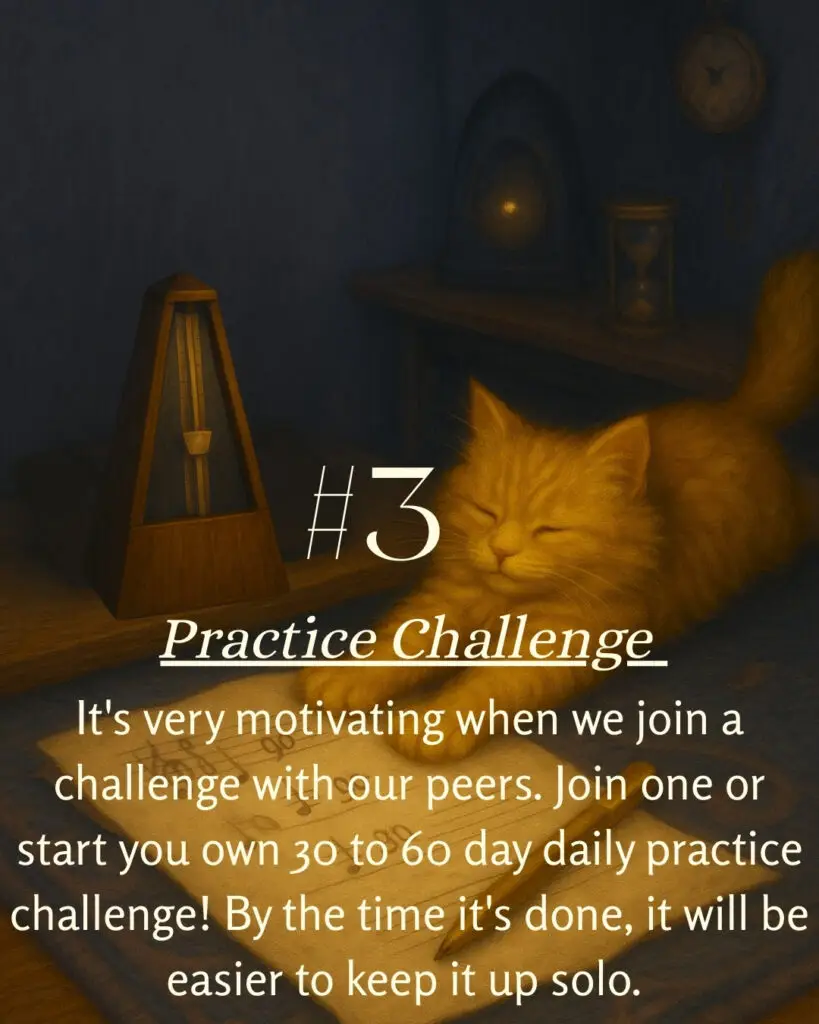
Motivation multiplies when shared. 🤝
Join a community challenge or start your own.
Pick 30 to 60 days of intentional practice, track your progress, and celebrate completion.
There’s something special about a community effort – when we know others are working toward the same goals we are, mutually keeping each other accountable, and all have a specific goal in mind.
It gives us that extra boost of motivation we need as we wait for our effort to become habit. You might start noticing a pattern in this blog – because habit is the goal.
🧭 Join the Movement: Post a photo or story of your practice using #DuoHansenPracticePath to join others walking the same journey. You might even get featured!
And you don’t have to play violin or cello – all musicians are welcome to join in – whatever your age, level, or instrument. 🎶
And if the extra motivation that comes with the challenge is a game changer for you, we host one challenge a month. Something fresh and different, but always tied to daily practice. Join in monthly and never accidentally miss a day again!
Big projects are great. But small deadlines? Even better. 🎯
Choose a 2–3 day mini-goal, like mastering a specific passage, nailing that tricky shift, or polishing phrasing in a single line. When that’s done, set the next one.
These “micro-milestones” build momentum and motivation – and you’re less likely to miss a day knowing you only have a short time to achieve those little goals you’ve set yourself.
🔨Need a system? Scorekeeper’s Sheets will help you set, track, and reflect on weekly intentions. 🕯️🪶📜
Nothing motivates quite like a performance.
Playing in a studio recital, posting a video, or even a private mini-performance for friends will help you stay focused and give meaning to your daily effort. Knowing others will hear your progress encourages deeper connection to your interpretation, too.
Even a casual performance goal can inspire more expressive, committed practice.
You might also notice you make a lot of progress following the performance (even mini performances for friends). This is the reward for playing under pressure. You gain a new sense of ease!
💡Bonus idea: Create a once-a-month “sharing day” where you play through a piece or record yourself to track growth.
Check in on our Instagram to see what this month’s challenge is. Join in and share your journey with the hashtag #DuoHansenPracticePath so we can cheer you on. The community will help you stay on track and have fun in the process.
🔥Visit the Store to download tools, explore bundles, and join our musical world.
You’ll find tips, sheet music, and a growing community of players who have joined the Quest to #PlayTheLegend.
How long should I practice each day?
This depends largely on your level, age, and goals. But there’s one universal truth: always, and we repeat, always get that violin, viola, or cello (or whatever instrument you call your own) out of that case on the hard days.
Even if it’s only for 5 minutes before bed. Even if it’s only a silent finger drill.
Do. It.
Otherwise, talk to your teacher about how much to practice daily – it might be 30 minutes or 4 hours. They’ll know best.
What if I miss a day?
No guilt needed. Just begin again tomorrow. Your progress and journey are not about any single day, but the patterns you create. If you zoom out and look at your month and see a high number of missed days, take steps to correct it. But one day in a blue moon won’t set you back. You got this. Keep your eyes on today.
Are the Scorekeeper’s Sheets free?
One complimentary beginner/intermediate sheet comes with a purchase of a beginner and intermediate bundles (bundles bearing an amber or green seal). The full collection for the beginner/intermediate and our Focused Practice Edition for upper intermediate/advanced are available in our shop.
Do I need to play violin or cello to use these tips?
Not at all! While we specialize in string playing and practice, our practice strategies are tried, true, and traditional – and will work for any musician.
Your practice journey doesn’t have to feel like a lonely uphill battle. With just a few steady shifts – you can transform your practice from scattered effort to meaningful momentum.
Together, let’s make your practice routine stick. 🎶🎻
A “How To” for Musicians Who Want to Feel Ready and Expressive On Stage Great performances begin long before you

The Struggle: Why Note Reading and Sight-Reading Are So Hard for Violin, Viola, and Cello Students The ability to read